


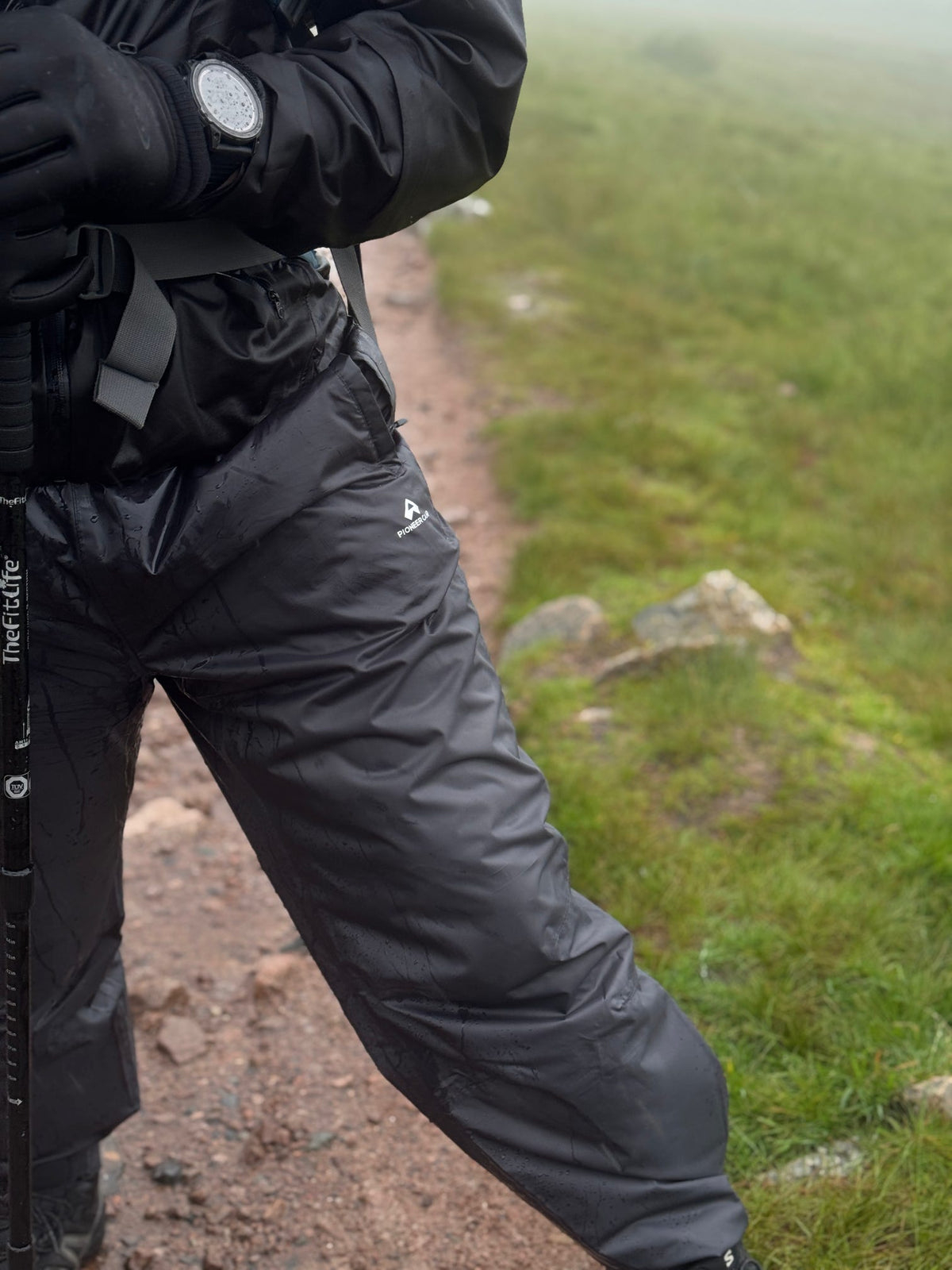
Jackets get most of the attention when fall weather turns, but wet brush, muddy trail edges, cold wind, and repeated steps can make the wrong pants just as uncomfortable. Fall hiking pants should protect without trapping too much heat, move without pulling, and dry quickly when the trail gets damp.
Here are the features that matter most—and when you may need a separate rain layer.
Start with drying speed
Fall conditions often involve mixed moisture rather than a full day of rain: damp grass, light drizzle, sweat on a climb, or a shallow stream crossing. Synthetic hiking fabrics usually dry faster than everyday cotton pants and are easier to manage through these repeated changes.
Quick drying does not mean waterproof. It means the fabric returns to a comfortable state sooner after getting wet.
Decide how much water protection you need
Water-repellent or water-resistant hiking pants can be practical for light moisture and brief exposure. For sustained rain, waterproof rain pants provide more dependable protection. If the forecast is uncertain, lightweight rain pants can ride in your pack until needed.
- Dry trail with cool air: standard stretch hiking pants.
- Damp brush or brief drizzle: water-repellent hiking pants.
- Steady rain or exposed route: waterproof rain pants over a comfortable hiking layer.
Compare options: water-repellent hiking pants

Look for movement where you need it
Fall hikes may involve high steps, scrambling, and uneven ground. Stretch fabric, a gusseted crotch, or articulated knees can improve range of motion. Test the fit by stepping onto a bench, squatting, and lifting a knee. The waistband should remain secure without digging in under a backpack hip belt.
Balance durability and weight
Heavier fabrics often handle rock, branches, and repeated wear better, while lighter fabrics breathe and pack more easily. Choose based on terrain. A maintained path may not require the same abrasion resistance as a rocky scramble or overgrown trail.
Plan space for a base layer
As temperatures drop, thin thermal leggings can extend the use of your hiking pants. If you expect to layer underneath, avoid a fit that is already restrictive through the thighs, knees, or seat. Try the full combination before your trip.
Use pockets with purpose
Secure zip pockets help keep small essentials from falling out. Thigh pockets can remain accessible beneath a hip belt. Too much stored in a pocket, however, may swing or press against your leg, so carry only items you need to reach quickly.
A simple fall pants system
- Wear quick-drying stretch hiking pants for normal conditions.
- Add a thin base layer when the air is cold but the trail is dry.
- Carry waterproof rain pants when prolonged rain is possible.
- Vent or remove the rain layer as soon as conditions allow to reduce internal moisture.
Explore: hiking pants for trail and everyday use
The right pants will not make the weather predictable. They will make it easier to keep moving when the trail shifts from dry to damp, warm to cool, and open ridge to sheltered forest.